25105102
SUPPORTING COMMENTARY:
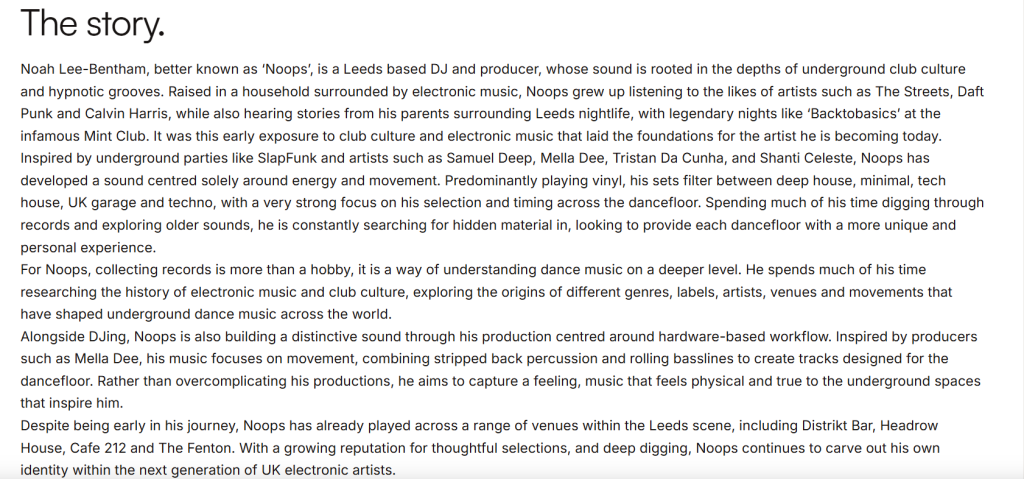
The main reason as to why I decided to create my own EPK, was so that I was able to establish and portray a professional identity as an artist. As a DJ/producer very early in my career, I wanted to create something that not only presents my music and background, but also offers an insight into the kind of artist that I am along with the values and influences behind a lot of my work. “An EPK gives you a professional edge and makes you more memorable when approaching event organizers, booking agents, and potential clients. It provides them with all the necessary information they need about you in a concise and well-presented format.” (R1creative, 2026.) Because electronic music is such a competitive and fast-moving industry, having an EPK will hopefully allow me to present myself in a more organised way when approaching said promoters, venues, labels, artists, managers etc. Moreover, the EPK also acts as an extension to that of my brand as an artist, helping build a visual identity that is recognisable. For me, it is essential that I have a consistent image that people can associate with my music.
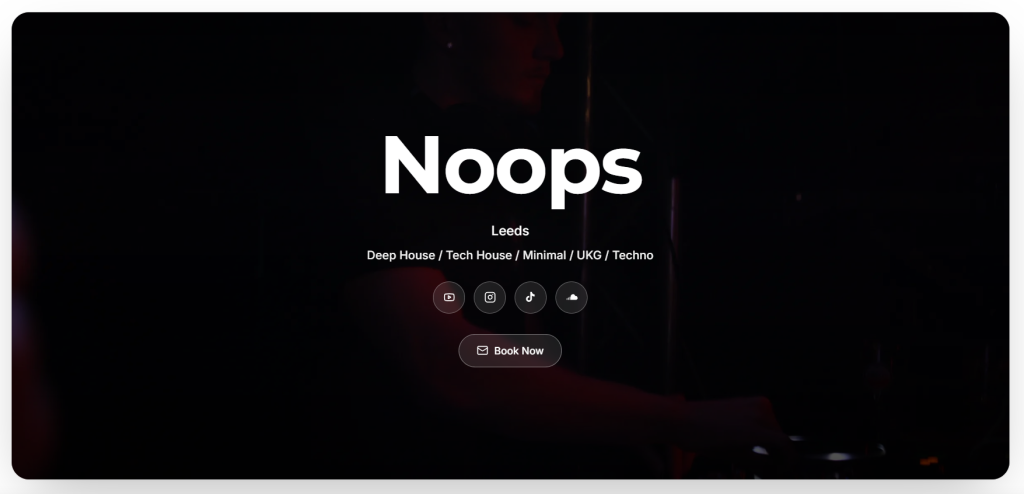
Through the design, photography, layout, colour scheme, artist bio and overall tone of the EPK, I wanted to create something that reflects the underground aesthetic that heavily influences my work as an artist. Having a strong visual presentation should help build a greater connection between musical influences and overall artistic identity, allowing the EPK to resonate with the style and culture that inspire my both my DJing and production. My intended audience for this EPK is going to be potential promoters, venues, labels and or collaborators within the electronic music industry. This means it is essential that the overall structure of my EPK is straightforward, clear, easy to navigate and visually engaging, as these people often have to filter through multiple artist profiles regularly. “Agency representatives, club owners, venue management, booking agents and record labels are all on the lookout for an artist with charisma and presence. An EPK is a great way to get your name out there and increase your exposure.” (R1creative, 2026.)
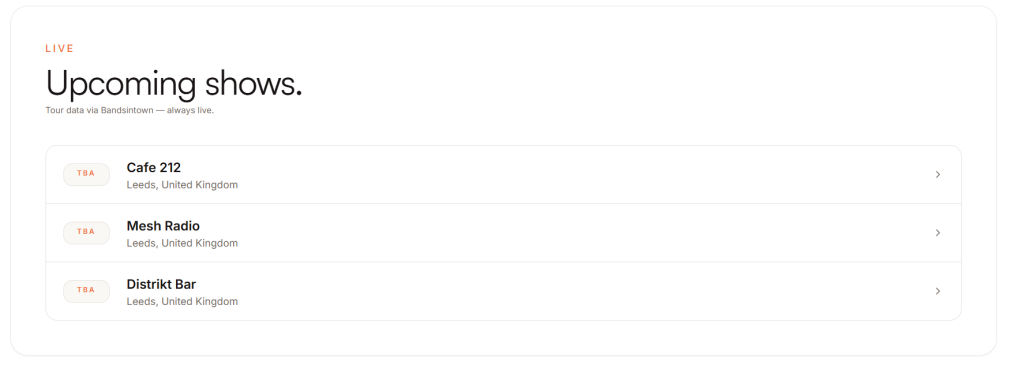
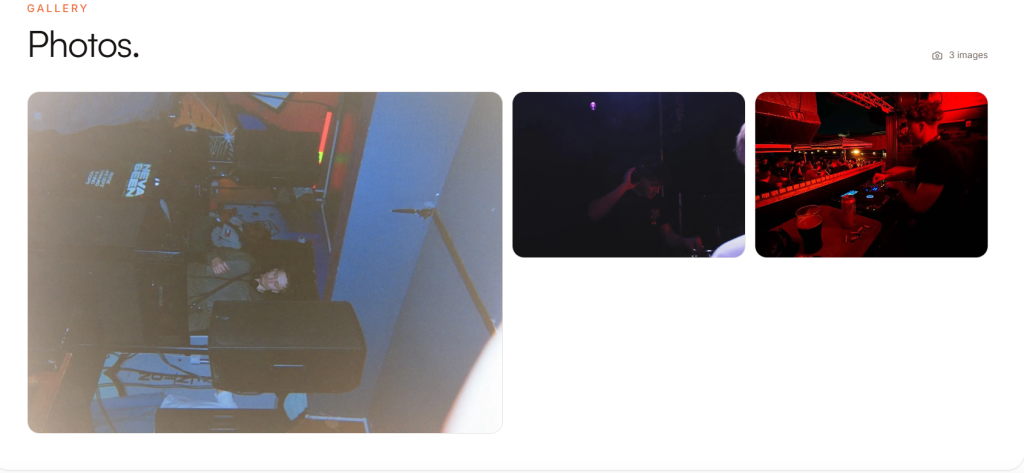
As I am currently a first year student and still in the early stages of developing as an artist, there are certain areas within my EPK that I intend to expand and improve on as I gain more experience within the industry. For example, although I have already performed at a range of venues across Leeds, I aim to continue building my experience by playing more frequently, playing at larger events, collaborating with more promoters and becoming more involved within the underground scene. Over time I would also like to include some professional photography, more recorded mixes, as well as some original releases from myself. “If possible, book a session with a photographer who specializes in music photography to take some shots specifically for your professional electronic press kit. (Reelcrafter, 2026.)
As for the branding and aesthetic decisions within my EPK, I would say they were very much heavily influenced by the underground culture that inspires my DJing and production. I wanted the overall presentation to feel natural and authentic, resonating with the style of music I play, while still maintaining a professional appearance. “Crafting a visually appealing EPK is essential for capturing attention and maintaining the interest of industry professionals. High-quality design elements such as a bold colour palette and seamless scrolling effect can greatly enhance the visual appeal of an EPK.”(Musosoup, 2025.) A major influence behind my branding decisions was my connection to vinyl culture and club music, I chose to keep the visual style relatively minimal with simple dark colour scheme, understated rather than overly commercial. I wanted the EPK to reflect the atmosphere and aesthetic commonly associated with underground dance music scenes, particularly those connected to deep house, minimal and techno culture.
I would argue, that in today’s music industry, having a strong digital presence is essential for developing as an artist, particularly within electronic music culture where the majority of networking and promotion takes place online. “Music is essential in social media interactions, with nine out of 10 engaging in music-related activities on major platforms. Today, musicians dominate the most-followed accounts on X, holding six of the top 10 spots.” (Oscar Collins, 2025.) Free platforms such as Instagram are important because they allow artists to promote events, share music, build audiences and directly interact with listeners and promoters at the cost of nothing. On top of that its, especially useful for creating visibility and staying active within fast-moving scenes, as audiences are constantly engaging with visual, short-form content. However, on the other hand, while social media platforms are important for exposure and communication, I believe an EPK offers a more professional and detailed representation of an artist. Social media often presents a range of content spread across posts, stories and highlights etc, whereas an EPK brings together all key information into one organised place. “Providing all the necessary information in a concise and easily accessible manner can also save time for potential clients and event organizers, who may be looking at multiple DJs.” (R1creative, 2026.)
After carrying out research, I found that within the electronic music industry, particularly in underground dance music culture, it is standard practice for artists to try develop a strong visual identity/digital presence alongside their music through the use of social media. Its evident that the vast majority build accounts on platforms like Instagram, TikTok, Soundcloud etc, in order to increase their audience reach. I noticed that many successful artist profiles tend to maintain a clean and minimal aesthetic that reflects the music itself. Artists associated with deeper house, minimal and underground club scenes often avoid overly commercial branding and instead focus on authenticity and consistency. This is something I particularly liked and wanted to reflect within my own EPK, as I feel it better represents the culture connected to the music I like.However, one thing I dislike within parts of the modern music industry is the pressure for artists to constantly follow trends or prioritise social media algorithms. In some cases, I also found that a lot of artist branding, although successful, can feel overly manufactured and therefore disconnected from the music itself. Because of this, I wanted my EPK to feel more personal and authentic, reflecting my genuine interests in vinyl culture, underground dance music.
Along with being a promotional tool, an EPK also plays an important role in helping artists create professional opportunities and generate revenue within the music industry. For DJs and producers, having an effective EPK can increase the likelyhood of securing potential bookings and collaborations. As promoters, venues and labels often receive large numbers of artist profiles, having a strong EPK helps articulate identity and professionalism. In this sense, the EPK becomes part of an artist’s wider branding and marketing strategy, helping attract the specific audience and industry connections. However, its worth mentioning that creating an EPK can come with a range of production and promotional costs. For example, professional photography is important in helping artists establish a strong visual identity although it often can require investment depending on the quality of the shoot. Other things like graphic design and branding may also add up, especially if outsourced professionally. Furthermore, some artists may choose to purchase domain names and website hosting in order to create a more professional online presence, gathering both their music and contact information in one place. Although some artists like myself create these elements independently to reduce costs.
GROUP WORK:
Working as part of a group throughout the development of my EPK helped me to generate and discuss ideas, offering and receiving collaborative feedback. During the ideation stage, we shared references from other artists EPKs, discussed different visual styles along with how different artists present themselves within their industry. Working as a group helped me to understand how I want to be portrayed as an artist, this meant I was able to then gage an idea of roughly how I wanted my EPK to look and feel. Having certain conversations and listening to feedback within the group, meant I was able to refine the structure, wording, branding and overall aesthetic, making it feel more personal, yet also professional.
The group work also helped give me an insight into the understanding of commercial application within music promotion/marketing. Analysing other EPKs and artist branding, meant I gained a better understanding of how artists market themselves professionally and how important a consistent digital presence is within the industry. It helped me to understand, that an EPK is not only a creative portfolio, but a professional tool that can help artists secure bookings, collaborations and other opportunities. Throughout this project, I would like to think that I developed both personally and as an artist. Creating an EPK helped me improve my understanding of branding and self-promotion, developing practical skills with regards to layout, design and visual presentation. Moving forward, there are multiple areas I would like to improve on as an artist. As well as just overall gaining more experience as a DJ and producer, I would like to further strengthen the professional content within my EPK by including official releases, mixes, performances and high-quality photography/cinematography. I would also like to improve my graphic design skills in order create even more distinctive EPK design. In addition, I want to continue developing my understanding of the music industry, particularly in areas such as artist marketing and digital promotion, as it has become apparent, that these skills are essential for building a long-term career within electronic music.
BIBLEOGRAPHY:
Anita Awbi, (2019) How to promote yourself as a new artist: the EPK. Available online:
How to promote yourself as a new artist: the EPK
Band Zoogle, (2025) The 8 things that should be in every band’s electronic press kit. Available online:
The 8 things that should be in every band’s electronic press kit | Bandzoogle Blog
MusoSoup, (2026) Creating an EPK: Essential Elements for a Standout Electronic Press Kit. Available online:
Creating an EPK: Essential Elements for a Standout Electronic Press Kit
Obscure Sound, (2025) How Important Is Your Band’s Social Media Presence? 5 Insights. Available online:
How Important Is Your Band’s Social Media Presence? 5 Insights
Olivia Management, (2021) The Making of a Great EPK. Available online:
The Making of a Great EPK | Olivia Management
Pick Yourself, (2025) Instagram for DJs and Producers: Blessing or Curse? Available online:
Instagram For DJs And Producers: Blessing Or Curse? – Pick Yourself
R1creative, (2026) 5 Reasons Why Every DJ Needs an Electronic Press Kit (EPK) Available online:
5 Reasons Why Every DJ Needs an Electronic Press Kit (EPK) | R1 Creative Agency
REAL Editorial Team, (2024). How to Create an Eye-Catching Electronic Press Kit (EPK). Available online:
How to Create an Eye-Catching Electronic Press Kit (EPK)
ReelCrafter, (2026) EPKs 101: What every artist needs in their electronic press kit. Available online:
EPKs 101: What every artist needs in their electronic press kit
TunePact Editorial, (2026) 8 Essential Elements for Every Musician’s Electronic Press Kit. Available online:
8 Essential Elements for Every Musician’s Electronic Press Kit | Tunepact
EPK: