
Introduction
For this intercultural music project, I have explored a range of different musical cultures and traditions, including South American tango, West African and Cuban rhythmic patterns, Middle Eastern intonation, and traditional melody and harmony from Eastern Europe. Delving into this range of less familiar genres over the past year has significantly developed my musical understanding outside of my Western training. Through collaboration, practice and research, I have learned how to integrate elements cross-culturally to produce interesting results.
This learning is demonstrated in my original intercultural piece, a Tango-centred composition mixed with Eastern European elements of melody, harmony and rhythm. As a classically trained cellist and double bassist, as well as a self-taught guitarist and bass guitarist, my main understanding of music comes from the Western classical and jazz-based practices. As a result, Western influences remain present in my piece in the form of a jazz-like instrumentation and harmony which underlie the whole composition.
My central understanding of intercultural music has significantly changed from the start to the end of this project. At first, I viewed intercultural music as simply a mixing of different styles, but through academic and practical learning I began to identify connections between different musical traditions, as they can use rhythmic, harmonic, melodic and instrumental devices to communicate emotions and structure performances to similar effect on their audiences. By exposing audiences to unfamiliar music styles, intercultural music can reduce or completley dissolve the barriers between genres and encourage greater musical accessibility.
The rest of this essay will discuss how my initial understanding of music-making developed with the help of experiences with and research into different cultures, and how this will influence my own creativity going forward.
Initial Perspective
Before embarking on this project, my musical understanding was strongly rooted in Western practices thanks to my classical training from a young age. I began learning cello at the age of 8, and this progressed to learning double bass and playing in orchestras and chamber groups, as well completing grade examinations. I also studied music at school during GCSEs and A-levels, and so my understanding of music theory was also heavily shaped in traditional Western classical language. Although this training helped me develop a solid technical foundation and relative pitch in music, this was limited to the Western 12-note chromatic scale. This meant that when I heard non-Western music, I would perceive it as “out of tune”.
Upon reflection of this, I realised how strongly Western classical training can condition expectations of tuning. This is a common and natural disadvantage of musicians trained exclusively within Western traditions, as when it comes to learning music of different cultures, they find it difficult to intonate alternative pitch systems. For example, Arabic scales/modes, or “Maqams”, incorporate microtonal intervals that are outside of the Western 12-tone equal temperament system, therefore meaning that traditional Western theory cannot be applied accurately.
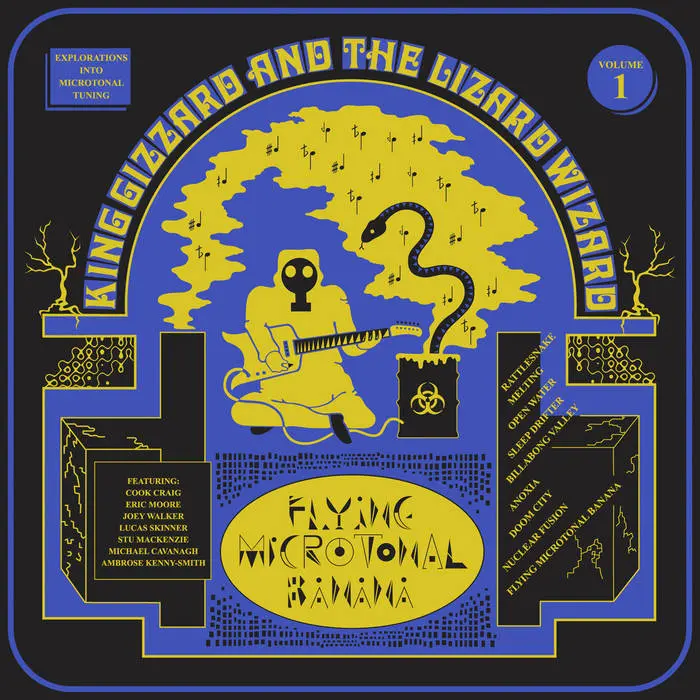
It wasn’t until the age of around 16 that I started developing an interest in some music of non-Western cultures. Being self-taught in both bass guitar and guitar, I felt I could take my learning freely in any direction I pleased, and so I would play along to Western popular music tunes that I liked, which included some examples of intercultural music, such as ‘Revolver’ by The Beatles and ‘Flying Microtonal Banana’ by King Gizzard and the Lizard Wizard.
Researching Intercultural Music
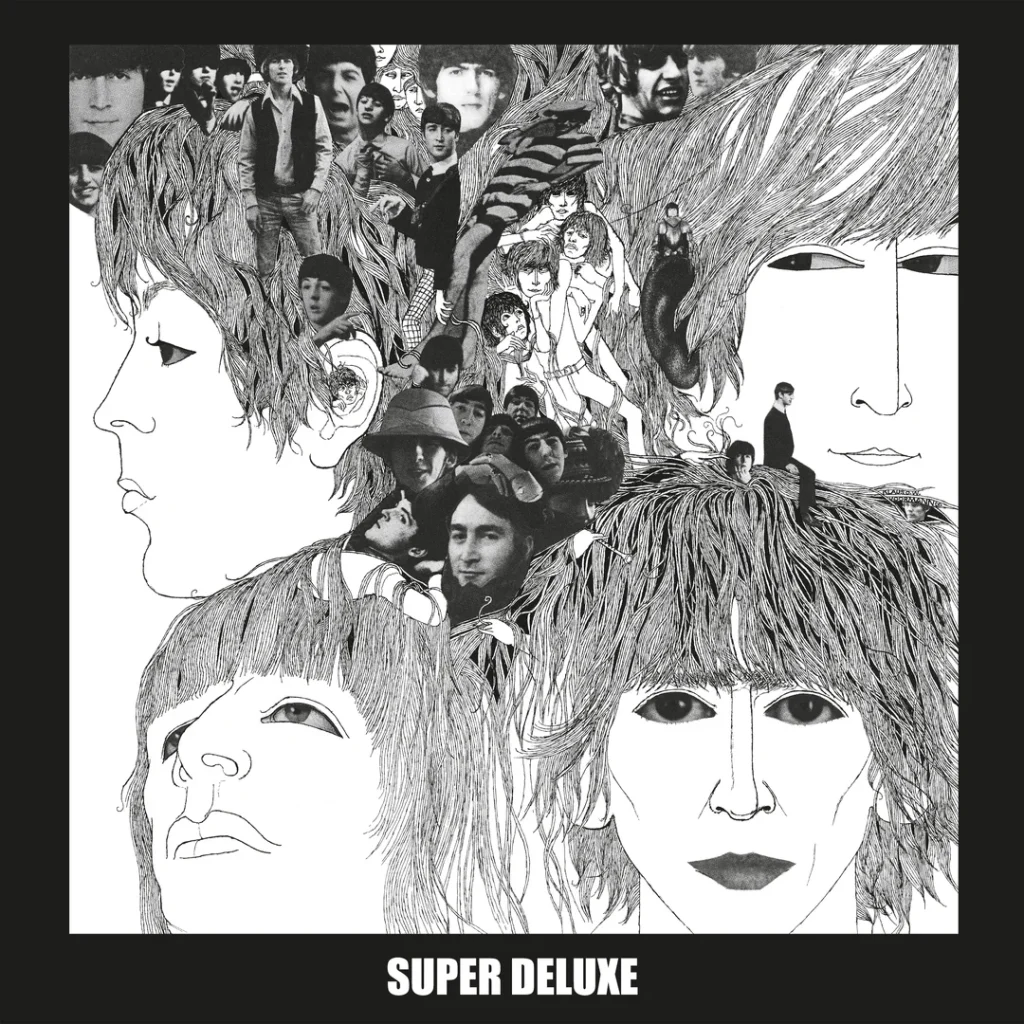
The album ‘Revolver’ by The Beatles features a strong Indian influence with the use of sitar, tabla and tambura. The fusion of Indian folk with experimental Western pop rock creates a unique and surreal atmosphere. I admire this execution of intercultural music because it is a purposeful combination of styles. Although both genres sound very different when compared, they have a crossover in their connotations; Indian music is often associated with spiritual practices like yoga and meditation, while Western rock in the 1960s often went hand in hand with the use of recreational drugs, something The Beatles were experimenting with at the time. The result of this combination on ‘Love You To’ and ‘Tomorrow Never Knows’ is a psychedelic mood which enraptures the listener. When reflecting on all this, I realised the importance of having conceptualised intentions behind intercultural music, and this is something I have taken into account with my intercultural composition. I combined a South American tango with Eastern European musical devices as they have some overlap and compatibility both rhythmically and harmonically (more on this later).
As a fan of King Gizzard and the Lizard Wizard, I came across their album ‘Flying Microtonal Banana’, a psychedelic rock album with a heavy Turkish and Arabic folk influence. They used guitars with added frets which divide the traditional 12-tone Western octave in half, creating a 24-tone equal temperament quarter-tonality and giving them access to a larger range of microtonal pitches. I would play along to this album using my fretless bass guitar, allowing me to try and match the half-semitone pitches heard in the album. This experimentation helped me gain some practical understanding of alternative, microtonal tuning systems, making the theoretical side more easy to comprehend.
Practicing Intercultural Music
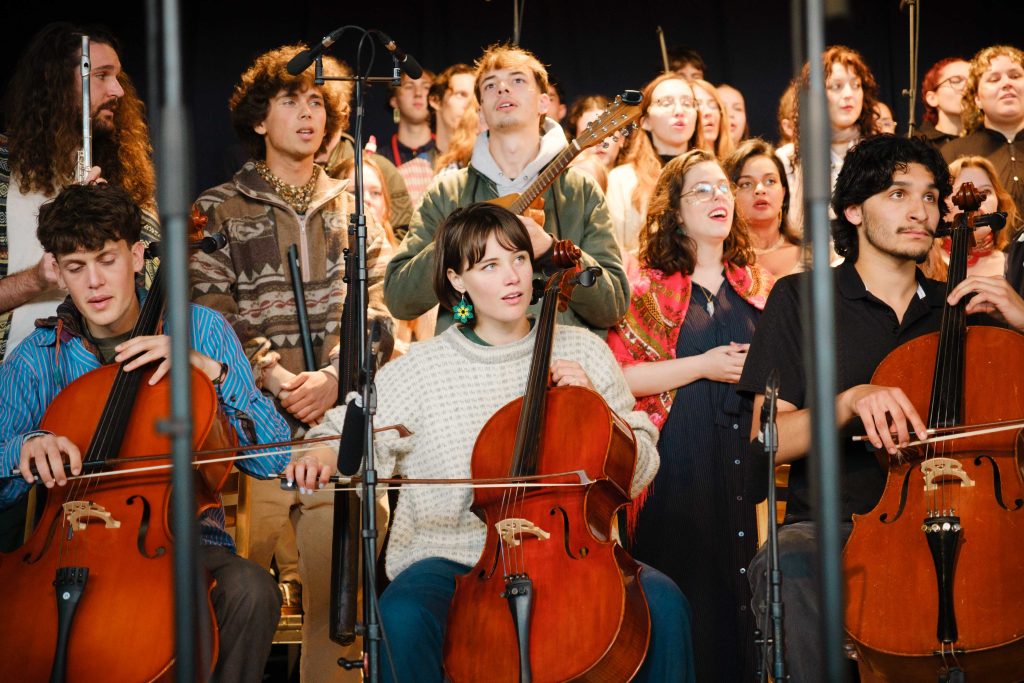
My more recent interest in folk music has significantly influenced my understanding of intercultural music too. In the summer of 2025, I attended the Ethno camp in Rattvik, Sweden. It is the largest and oldest international music camp in the world, with up to 100 participants from 15-20 countries. Not only did we share traditional music with each other, but we learnt and adapted them into arrangements suitable for such a large, almost orchestral ensemble, with workshops, jams and performances. This was a truly eye-opening experience for me, as I got to grips with many unfamiliar styles of music such as Breton, Palestinian and Indian, and Congolese folk. What I found most interesting with these styles was their use of rhythmic structures. For example, a Palestinian participant named George showed us a centuries-old Andalusian song called ‘Lamma Bada Yatathanna’ which is played in 10-time. Although metres like 10/8 are uncommon in Western classical and popular traditions, the phrasing, subdivision and accent placement within ‘Lamma Bada Yatathanna’ created a cyclical groove. This challenged my previous assumption that danceability relied upon symmetrical metric structures such as 4/4 or ¾, which inspired me to research more “irregular” dance rhythms like those found in Eastern European folk.
‘Lamma Bada Yatathanna’ (Palestine) – Ethno Sweden Live in Rattvik (3rd July 2025):
Furthermore, I discovered the importance of intercultural collaboration. In folk music, communication and community are key to retaining traditional tunes and practices that are preserved and passed down through generations. This is relevant to intercultural music too, as each culture’s traditional music has deep historical roots that must be respected. When it comes to mixing the music of different cultures, it is important to be aware of this respect. While it is fun to experiment with mixing different culture’s musical devices, you do not want to upset a culture that you are not indigenously a part of by insulting their craft with a lack of research and understanding. At Ethno, intercultural collaboration was key in ensuring that everyone, with varying degrees of musical understanding, could learn the repertoire, as well as develop it into something that sounded good while still respecting the origins and cultural significance of each piece. For example, an Indian participant named Ankita brought in a traditional song from the Punjab region called ‘Pa Chanaa De’, which tells the story of two lovers whose partnership is forbidden by their families and separated by a river. In spite of this, the woman crosses the river every night in a hard clay pot to see her love. One night, her evil aunt replaces the hard pot with a soft clay pot, and so she drowns. Ankita made sure we knew this story well, and so when it came to playing the song we all truly felt a part of it, now having an understanding of the lyrics and bitter-sweet sounding nature of the song. For instance, the final repetition of the chorus speeds up, and this was symbolic of the woman drowning in the river on her final voyage. The ensemble’s awareness of this detail allowed us to give the performance a certain intensity that aligned with the story.
‘Pa Chanaa De’ (India) – Ethno Sweden Live in Rattvik (3rd July 2025):
The organisers of Ethno Sweden invited me to return to Sweden in February 2026 for ‘Ethno On the Road’, a promotional tour to the very North of Sweden which included 12 live performances. We played many of the tunes from the summer, now arranged for a 7-piece band, and I was able to get really familiar with the set whilst playing cello, fretless bass guitar, acoustic guitar and singing. The tour ended at the UmeFolk festival in Umea, in which I experienced a lot of traditional Swedish “Polska” music and dance in ¾. I researched further into polska and asked Lena Jonsson, a famous Swedish fiddle player and member of our on the road band, more about it. I also listened to her album ‘The Power of Polska’, which features a number of polska tunes. Unlike the even 3 beats of a waltz, the polska emphasises the 1 and 3, resulting in a slightly uneven lilt that is matched by the accompanying couples dance. I attempted to write my own polska initially as part of my intercultural composition, and found that my prior classical training helped with harmony, although I found it challenging to stray from a waltz rhythm and consistently imitate the Swedish lilt and combine it with music from a different culture.
My Swedish Polska ideas played on cello (4th March 2026):
At Ethno Sweden, I also met a number of Bretonic folk musicians from France, and they invited me to volunteer at a traditional “fest-noz” called ‘Les Assembllees Galezes’ the following month in Concoret, Brittany. This was a small-scale festival which celebrated Brittany’s Celtic culture with music and dance, and it was interesting to witness the revival of folk enthusiasm within the French youth. Although there were many traditional Breton music performances, there were also jams every night in which the young musicians developed traditional scalic melodies in Western jazz inspired ways, adding complex drums, extended chords and solos. The resulting music was an effective blend of old and modern that kept the traditional “dans breton” going through the night. This combination of jazz with older styles is something I applied later in my own composition too.
Application in My Composition
I chose to compose my own South American inspired tango as I discovered that my classical training, particularly on the cello and double bass, gave me an advantage. The tango originated in the 1880s across the Rio de la Plata, the border between Argentina and Uruguay. It quickly gained popularity for its minor tonality, driving pulse and syncopation, and in the early 20th century it spread to the West who adopted the style due to its suitability to Western harmony and instrumentation, like orchestras, chamber groups and jazz bands. During my learning of the cello, I encountered the tango several times, such as Astor Piazzolla’s ‘Le Grand Tango’ and David Matthews’ ‘Tango Flageoletto’, so the style was already quite familiar and natural to me. Playing to my strength of experience with tangos, I wrote an A and B section chord progression in A minor and a 4/4 time signature, as well as an accompanying melody that stayed true to a tango’s key qualities, using inflections like trills, turns, slides, and staccato. I also wrote a “marcato” bass line which helped steady the pulse like in a traditional tango.
My initial Tango ideas played on cello (5th March 2026):
Tango adapted for 5/8 while experimenting with alternative rhtyhms (12th March 2026):
My discovery of danceable asymmetrical time signatures like the 10/8 used in ‘Lamma Bada Yatathanna’ encouraged me to research more Eastern folk rhythms. I found the Bulgarian Kopanica dance in 11/16 to be suitable for my adapted tango. Bulgaria is famous for dance rhythms featuring intricate, uneven beats. In the West, most would be tempted to follow a 11/16 rhythm by counting up to 11 and then returning to beat 1, but In the East they subdivide these rhythms into short and long beats, reducing their complexity. So 11/16 is counted like so: “short short long, short short”, or “one-two one-two one-two-three one-two one-two”. There are alternative ways to count this too, for example, I spoke to a drummer who was familiar with Kopanica, but he was taught to remember the beat as “six-teen pints o’la-ger”. However you remember it, the important thing is that these uneven rhythms can be thought of in a less mathematical way in order to make them easier to remember and follow, and this helped me adapt my tango suitably to this new beat.
Interestingly, I found that when clapped or beat, the “short short long, short short” subdivision fulfilled a similar roll to a Cuban 3-2 “son clave” or a West-African bell pattern. Although they do not rhythmically align perfectly, all supply a core rhythm within their music that can easily be followed by the performers and audience, anchoring the entire ensemble with a steady groove and helping make the music easily danceable.
Tango explained and adpated for 11/16 (29th March 2026):
My training in Western musical theory made me lean towards a jazz approach to the 11/16 section of my piece. Jazz, with its use of extended chords, modes and complex rhythms, is often used as an element in intercultural music. For example, pianist Tigran Hamasyan famously blends traditional Armenian folk with modern jazz and progressive rock. This is apparent in his reimagining of ‘Shogher Jan’, originally written by Armenian composer Komitas around the year 1900. Another example I’ve found of Western jazz in intercultural music is Tarek Yamani’s version of ‘Lamma Bada Yatathanna’. This arrangement embraces the original composition’s 10/8 time signature as it translates well into a jazz context, encouraging complex polyrhythmic development. The piano in this piece also builds on the harmony with much dissonance and extensive virtuosic soloing. In the second half of my composition, I have used piano and a drum kit to similar effect.
My intercultural composition begins with an introduction to the tango in 4/4 and later reintroduces the tango in 11/16. In order to join these two sections, I wrote a Klezma-inspired free tempo bridge. I chose a Klezma tonality in order to conceptually bring the tango to Eastern Europe, as the Dorian #11 scale, known as the “Romanian minor”, followed on from the A minor tango with a natural feel. Furthermore, the #11 produces a tritone interval with the root note, creating tension in the build up before the release of the 11/16 beat. The inspiration for it being free in tempo came from the Budapest Klezma Band, who are also seen using “senza misura” to build tension before release of falling back into tempo.
Analysis of My Composition
Although my intercultural composition succeeded in many respects, it also had weaknesses that need addressing. One limitation was I often instinctively defaulted to Western classical and jazz language which diminished the prominence of the Eastern influence on occasion. This did help communicate a coherent identity associated with my own musical background, but it also demonstrated just how hard it can be to move away from deeply rooted, habitual musical programming. This was also apparent when it came to rhythm, as while I academically understood the 11/16 subdivisions, there were times when keeping a natural-sounding groove, especially when rehearsing with an ensemble, proved a challenge, as players (including myself) would revert to familiar even metres by accident.
Unfortunately too, due to a limited time among players and some lack of organisation on my part, I was unable to record my composition live with a full ensemble, and instead I had to play live solo to a backing track. This significantly reduced the authenticity of the performance in my opinion, as the midi drums and piano do not compare to real instruments. Also, playing without other performers in the same room made it a bit difficult for me to keep time, especially during the free tempo Klezma section, which would have benefitted significantly from a live ensemble.
On the other hand, there were many strong elements of my composition that are worth noting. Conceptually, I consider the execution a success, as the tango I wrote sounds like a tango, and I adapted it well to the uneven Kopanica rhythm; it doesn’t sound clunky and it feels danceable, which is what I set out to achieve. Furthermore, I believe that the Klezma section succeeds in bridging the gap between South America and Eastern Europe. The Dorian #11 tonality sounds like a natural progression following the tango, and the whole section leaves enough time for the return of the tango’s melodic motif (played by the lead cello) to feel satisfying.
Conclusion and Ideas for Future Development
To conclude, this process has allowed me to acquire a good base knowledge of intercultural music concepts from which I can build and develop for future cross-genre projects and collaborations.
I have already gained a number of international contacts for intercultural music collaboration, mainly through Ethno, and I plan to meet more at future ethnos. In October 2026, I will be going to Ethno Bosnia and Herzegovina and hope to learn more about Eastern European music on a practical level, perhaps delving deeper into microtonality, complex time signatures, and instrumentation.
My knowledge of microtonal music will still develop in the meantime, as I was recently inspired to buy an Arabic Oud, a traditional lute-like instrument from the Middle East. I plan to learn it the traditional way and learn all the Maqams, strengthening my microtonal intonation and understanding of traditional Eastern music practices.
In doing this project, I have also learnt a number of helpful devices that can be applied outside of intercultural music to my regular music making. For the example, the dividing of 11/16 into “short” and “long” beats can be used with other, more common uneven time signatures, such as 5/4 and ⅞. This will be very helpful for me as I often use odd time signatures in a rock context, and this method will make it easier to feel the beat rather than count it.
The shortcomings of this project have also made clear to me what I need to work on. Dealing with a busy university schedule made it so I couldn’t commit as much time as I would ideally have wanted for this project, and so I will make sure that I organise rehearsals further in advance and schedule extra time to get to grips with any unfamiliar musical concepts going forward.
Bibliography
- Coke Studio Pakistan (2016) Coke Studio Season 9 | Paar Chanaa De | Shilpa Rao & Nooori [Video]. Available online: https://www.youtube.com/watch?v=TrPvQvbp3Cg&list=RDTrPvQvbp3Cg&start_radio=1 [Accessed 12/05/2026].
- Ethno World (2025) Ethno Sweden. Available online: https://ethno.world/ethno/sweden/ [12/05/2026].
- Ethno World (2026) Music & Friendship – Ethno Sweden Mini Documentary [Video]. Available online: https://www.youtube.com/watch?v=GE3QSAKMXRU [12/05/2026].
- Folkdance Footnotes (2026) Bulgarian Dance Rhythms (Uneven). Available online: https://folkdancefootnotes.org/dance/dance-information/bulgarian-dance-rhythms/ [Accessed 12/05/2026].
- Heifetz International Music Institute (2020) Piazzolla: Le Grand Tango | Antonio Lysy, cello; Anton Smirnoff, piano [Video]. Available online: https://www.youtube.com/watch?v=39Gothl6_tI [Accessed 13/05/2026].
- King Gizzard and the Lizard Wizard (2017) Flying Microtonal Banana [CD]. HEAVENLY.
- Lena Jonsson & Johanna Juhola (2026) The Power of Polska [CD]. Nordic Notes.
- Les Assembllées Galèzes (2026) Les Assembllées Galèzes 2026. Available online: https://assembllees-galezes.bzh/
- Medhi El Alaoui (2011) Lena Chamamyan – Lama Bada yatathana (لما بدا يتثنى) [Video]. Available online: https://www.youtube.com/watch?v=EE8cHyjCNLE&list=RDEE8cHyjCNLE&start_radio=1 [Accessed 12/05/2026
- Reddit (2014) What makes a piece of music sound middle eastern/Arabic? Available online: https://www.reddit.com/r/musictheory/comments/1yif41/what_makes_a_piece_sound_middle_easternarabic/ [12/05/2026].
- Tamás Molnár (2013) Budapest Klezmer Band [Video]. Available online: https://www.youtube.com/watch?v=0VdoHnidz70&list=RD0VdoHnidz70&start_radio=1&t=373s [Accessed 12/05/2026].
- Tarek Yamani (2011) Tarek Yamani: Lamma Bada Yatathanna | طارق يمني: موشح لما بدا يتثنى [Video]. Available online: https://www.youtube.com/watch?v=_8-RMP3UyT8&list=RD_8-RMP3UyT8&start_radio=1 [Accessed 13/05/2026].
- The Beatles (1966) Love You To. Revolver [CD]. (Remastered 2009) Apple Corps Ltd.
- The Beatles (1966) Revolver Revolver [CD]. (Remastered 2009) Apple Corps Ltd.
- The Beatles (1966) Tomorrow Never Knows. Revolver [CD]. (Remastered 2009) Apple Corps Ltd.
- The Cello Suite 大提琴樂館 (2021) ABRSM Cello Grade 7 David Matthews: Tango Flageoletto [Video]. Available online: https://www.youtube.com/watch?v=FakcBCIiWYE [Accessed 13/05/2026].
- The Pop Descriptivist (2024) The Microtonal Scales of King Gizzard and the Lizard Wizard – a Primer and Compendium. Available online: https://sites.google.com/site/thepopdescriptivist/home/the-microtonal-scales-of-king-gizzard-and-the-lizard-wizard [12/05/2026].
- TigranHamasyan (2021) Shogher Jan (Live at the Aram Khachaturian Concert Hall, 2010) [Video]. Available online: https://www.youtube.com/watch?v=v_uKYF2tcko [Accessed 13/05/2026].
- Wikipedia (2026) History of the tango. Available online: https://en.wikipedia.org/wiki/History_of_the_tango [Accessed 13/05/2026].
- Yerevan State Chamber Choir (2019) KOMITAS – “Shogher jan” – Yerevan State Chamber Choir [Video]. Available online: https://www.youtube.com/watch?v=eRMdeGFcn9Y [Accessed 13/05/2026].
